Ratha Yatra – The Journey of Lord Jagannath
The Glory of Ratha Yatra
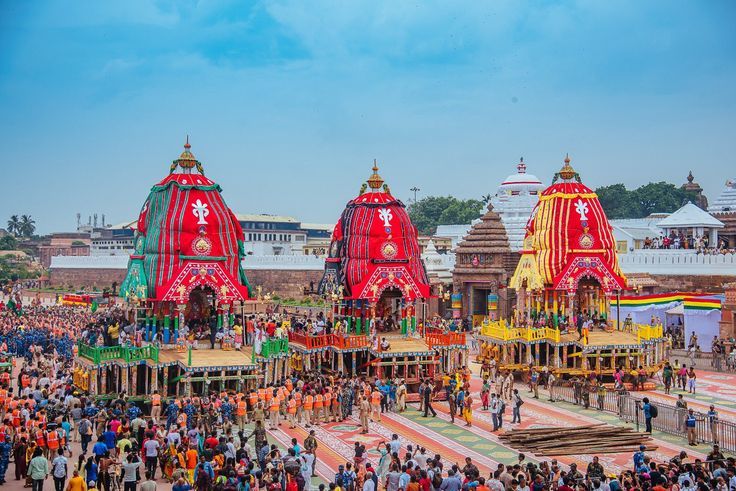
Ratha Yatra is one of the most magnificent and sacred festivals in India, celebrated with great devotion, joy, and enthusiasm. Known as the Festival of Chariots, it marks the annual journey of Lord Jagannath, along with His siblings Balabhadra (Balarama) and Subhadra Devi, from their temple to the Gundicha Temple in Puri, Odisha.
This festival is not just a ritual or a parade it is a celebration of divine love, equality, and surrender.
During Ratha Yatra, the Lord Himself comes out of His temple to meet His devotees, showing that God belongs to everyone, not only to those inside sacred walls.
When the ropes of the chariot are pulled, it symbolizes that the devotees are pulling the Lord closer to their hearts.
The Meaning and Origin of Ratha Yatra
The word Ratha Yatra comes from Sanskrit:
Ratha means chariot, and
Yatra means journey or pilgrimage.
Thus, Ratha Yatra literally means the Journey of the Lord’s Chariot a sacred procession that carries the deities through the streets, allowing everyone, from kings to common people, to have their divine darshan.
The origin of Ratha Yatra lies in the deep love between Lord Krishna and His devotees. The festival is linked to Krishna’s return to Vrindavan to meet His beloved devotees, after spending years away in Dwarka. It represents the soul’s longing for reunion with God.
In the Jagannath Temple of Puri, this Leela is celebrated as Ratha Yatra, where Jagannath (Krishna) symbolically comes out to meet His devotees, who wait eagerly to see Him on the streets.
The Divine Story Behind Ratha Yatra
According to the Puranas and Jagannath Mahatmya, the story of Ratha Yatra goes back to ancient times.
Once, after the Kurukshetra war, Lord Krishna, accompanied by Balarama and Subhadra, visited Kurukshetra in a royal chariot. Hearing this, the residents of Vrindavan especially the Gopis and Radharani rushed there to meet Him.
They could not bear to see Krishna in royal garments and surrounded by opulence they longed for the simple cowherd boy they once knew.
They pleaded with Him:
“O Krishna, come back to Vrindavan : where love is pure and unconditional.”
Moved by their love, Krishna agreed.
This return journey from Kurukshetra back to Vrindavan is remembered every year as the Ratha Yatra of Lord Jagannath.
The Three Deities of Ratha Yatra
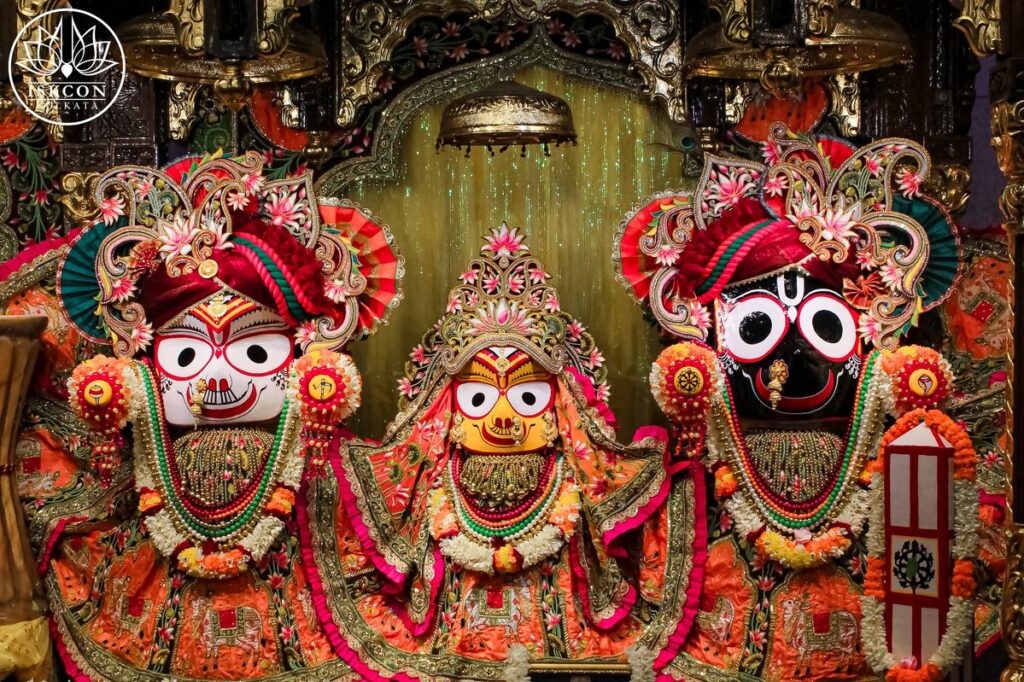
The Ratha Yatra features three divine siblings:
Lord Jagannath (Krishna) : Symbol of compassion and the Supreme Lord of the Universe.
Lord Balabhadra (Balarama) : Krishna’s elder brother, representing strength, truth, and protection.
Subhadra Devi : Their sister, symbolizing divine love and harmony.
Each deity rides a separate chariot, richly decorated with flowers, flags, and fabrics of brilliant colors.
Jagannath’s Chariot: Called Nandighosha, with 16 wheels and red-yellow cloth.
Balabhadra’s Chariot: Called Taladhwaja, with 14 wheels and red-green cloth.
Subhadra’s Chariot: Called Darpadalana, with 12 wheels and red-black cloth.
The sight of these massive chariots moving through Puri is breathtaking a scene that fills hearts with devotion and awe.
The Celebration of Ratha Yatra in Puri
Ratha Yatra is celebrated in Puri, Odisha, as the grandest festival of Lord Jagannath.
On this day, millions of devotees gather to witness the sacred journey.
The atmosphere vibrates with chants of “Jai Jagannath!”, the beating of drums, and the ringing of temple bells.
When the temple gates open, the three deities are brought out in a magnificent ritual called Pahandi Bije, where they sway rhythmically to the sound of conches and cymbals.
Devotees cry tears of joy as they behold their Lord stepping out to meet them.
Pulling the Chariots – The Rope of Devotion
One of the most emotional and sacred parts of Ratha Yatra is the pulling of the chariots.
Thousands of devotees hold the thick ropes attached to the giant chariots, chanting “Hari Bol! Jai Jagannath!” as they pull them through the streets.
It is believed that pulling the Lord’s chariot cleanses lifetimes of sins and brings divine blessings. The rope represents the bond of love between God and devotee.
No one not even priests or kings is considered above another. Everyone, regardless of caste or status, can pull the Lord’s chariot.
It’s a powerful symbol of equality and unity in devotion.
The Journey to the Gundicha Temple
The destination of the Ratha Yatra is the Gundicha Temple, located about three kilometers from the main Jagannath Temple.
According to tradition, this temple represents Vrindavan, the place of pure love.
The Jagannath Temple represents Dwarka, the place of royal life.
Thus, when the Lord travels from His main temple to Gundicha, it signifies His journey from opulence to simplicity from grandeur to the purity of love.
The Lord stays at Gundicha Temple for seven days, enjoying offerings and prayers from His devotees, before returning to His home in a procession called Bahuda Yatra (Return Journey).
The Return Journey – Bahuda Yatra
After a week, the Lord begins His return journey to His main temple. This day is called Bahuda Yatra.
On the way back, the chariot stops at the Mausi Maa Temple, dedicated to Lord Jagannath’s aunt. Here, the Lord is offered Poda Pitha, a traditional sweet dish made of rice, coconut, and jaggery.
This beautiful tradition shows that God, though supreme, shares human emotions — love, relationships, and affection.
The Spiritual Significance of Ratha Yatra
The Ratha Yatra is a divine metaphor for the spiritual journey of the soul.
The Lord’s Chariot : The Body:
Our body is like the chariot; the soul is the passenger.The Rope : Faith and Devotion:
Devotion pulls the soul closer to God.The Wheels : Dharma (righteousness):
A life grounded in truth moves forward smoothly.The Journey : Life’s Path:
Our spiritual journey is complete only when we reach the Lord’s presence.
In this way, Ratha Yatra teaches us that the ultimate goal of life is to bring God into our hearts and let Him steer our lives.
Ratha Yatra in Other Parts of India and the World
While Puri is the heart of Ratha Yatra, the festival is celebrated with great devotion across India and worldwide thanks to the efforts of saints and organizations like ISKCON (International Society for Krishna Consciousness).
Cities like Vrindavan, Mathura, Ahmedabad, Kolkata, Delhi, and Mumbai host grand processions with singing, dancing, and chanting of the Hare Krishna Mahamantra.
Even abroad, in places like London, New York, Sydney, and Moscow, the streets echo with “Hare Krishna” as colorful chariots carry the Lord through the cities spreading divine love across continents.
Teachings and Lessons from Ratha Yatra
God Comes to His Devotees:
The Lord does not wait for us to reach Him He comes out to bless us.Equality in Devotion:
Everyone, regardless of background, can serve and pull the Lord’s chariot.Detach from Ego:
Like Indra in Govardhan Leela, we must let go of pride and surrender to divine will.The Journey of the Heart:
The real Ratha Yatra happens within when we invite the Lord to ride in our hearts.Unity in Love:
Pulling the same chariot together shows that all souls are connected through God.
How to Celebrate Ratha Yatra at Home
Even if you can’t attend the grand festival in Puri, you can still celebrate Ratha Yatra at home with devotion:
Decorate Your Home Altar with pictures of Lord Jagannath, Balabhadra, and Subhadra.
Offer Fruits, Sweets, and Flowers as your Annakut Seva.
Chant the Mahamantra:
Hare Krishna Hare Krishna, Krishna Krishna Hare Hare,
Hare Rama Hare Rama, Rama Rama Hare Hare.Sing Bhajans and Read Leelas of Lord Jagannath and Krishna.
Watch Ratha Yatra Live from Puri and meditate on the Lord’s journey.
The essence of the celebration lies in love, not location.
Wherever you remember the Lord with faith, He manifests there.
The Divine Mystery of Lord Jagannath’s Form
One of the most fascinating aspects of Ratha Yatra is the unique form of Lord Jagannath. His large round eyes, unfinished limbs, and smiling face symbolize His boundless love ever-watchful, ever-forgiving, and full of compassion.
It is said that the Lord took this form out of ecstatic love for His devotees, especially remembering Radha and the Gopis of Vrindavan.
His incomplete arms express that He longs to embrace every soul who calls His name.
The Heart of Ratha Yatra
Ratha Yatra is not merely a festival; it is a journey of love, humility, and divine connection.
It teaches us that God is not confined within temples He lives in the streets, among the people, in every heart that calls out with love.
When we pull the ropes of the chariot, we are pulling our own hearts closer to Him.
“Jagannath Swami Nayan Patha Gami Bhavatu Me”
O Lord of the Universe, please appear on the path of my eyes and reside in my heart forever.
May the blessings of Lord Jagannath, Balabhadra, and Subhadra fill your life with love, peace, and devotion.
Jai Jagannath! Hare Krishna! Radhe Radhe!