Diwali and Annakut Utsav in Vrindavan – The Festival of Gratitude
The Radiant Joy of Diwali and Annakut Utsav in Vrindavan
Diwali and Annakut Utsav in Vrindavan are not just festivals they are divine celebrations of light, love, and gratitude that fill the sacred land of Lord Krishna with heavenly joy.
While Diwali across India celebrates the return of Lord Rama to Ayodhya, in Vrindavan it is celebrated with devotion to Krishna, symbolizing the triumph of divine love and the offering of gratitude to God.
The next day after Diwali, devotees celebrate Annakut Utsav (Govardhan Puja) the festival when Lord Krishna lifted the Govardhan Hill to protect the people of Vrindavan and taught them the importance of offering thanks to nature and the Divine.
Together, Diwali and Annakut Utsav in Vrindavan represent the light of devotion and the abundance of gratitude.
The Spiritual Meaning of Diwali in Vrindavan
In Vrindavan, Diwali is not about wealth or worldly success it is a celebration of spiritual illumination.
When the lamps are lit, devotees remember that the real light is the light of Bhakti (devotion) which removes the darkness of ignorance and ego.
Each diya (lamp) represents a heart shining with love for Krishna.
As thousands of lamps flicker in the holy temples, the entire Vrindavan glows like a reflection of Goloka, the eternal abode of Radha and Krishna.
“Lighting a lamp in Vrindavan is like lighting the heart with Krishna’s eternal love.”
How Diwali Is Celebrated in Vrindavan
The Diwali and Annakut Utsav in Vrindavan celebrations begin with early morning aartis, temple decorations, and offerings to Lord Krishna.
Temples like Banke Bihari Mandir, ISKCON Vrindavan, Radha Raman Temple, and Prem Mandir become adorned with thousands of diyas, fragrant flowers, and colorful rangolis.
Devotees offer sweets, fruits, and incense to the Lord, chanting:
“Jai Shri Radhe! Jai Shri Krishna!”
The whole atmosphere is charged with divine joy.
Children light sparklers, elders chant bhajans, and the streets echo with the sound of conch shells and bells.
At night, the entire Vrindavan shines like a sea of golden light as if every diya carries the name of Radha and Krishna within its flame.
The Connection Between Diwali and Lord Krishna
Though Diwali is famously linked with Lord Rama, in Vrindavan it has a special connection with Lord Krishna.
According to the Bhagavata Purana, the festival also marks the victory of Krishna over the demon Narakasura, who had captured thousands of innocent beings.
When Krishna destroyed Narakasura and freed the captives, the people celebrated by lighting lamps just as they did in Ayodhya for Rama.
Hence, in Vrindavan, Diwali is celebrated as a day of Krishna’s victory and mercy a day when darkness was destroyed by divine love.
Annakut Utsav – The Festival of Gratitude
The day after Diwali is celebrated as Annakut Utsav, which literally means “mountain of food.”
It commemorates the day when Krishna lifted the Govardhan Hill to protect the people of Vrindavan from Indra’s wrath.
Instead of worshipping Indra, Krishna taught the villagers to worship Govardhan Hill, cows, and Mother Earth — as they are the direct providers of food and shelter.
In honor of this divine act, devotees prepare a huge variety of dishes sweets, vegetables, fruits, rice, and delicacies and offer them to Krishna as a gesture of gratitude.
This beautiful celebration is known as Annakut Mahotsav, forming an inseparable part of Diwali and Annakut Utsav in Vrindavan.
The Divine Story of Annakut Utsav
Once, the people of Vrindavan prepared grand offerings to please Lord Indra, believing his blessings brought rain.
But young Krishna questioned them gently:
“Is it Indra who gives rain, or does nature the trees, rivers, and mountains nourish us?”
He taught that true worship lies in gratitude toward nature and service to all living beings.
The villagers followed Krishna’s advice and offered their food to Govardhan Hill instead of Indra.
Angered, Indra sent torrential rain to destroy Vrindavan.
But Krishna, with a divine smile, lifted the entire Govardhan Hill on His little finger, sheltering everyone beneath it for seven days.
This miracle became the foundation of Annakut Utsav a festival celebrating Krishna’s protection, love, and the spirit of gratitude.
How Annakut Utsav Is Celebrated in Vrindavan
In Vrindavan, the Annakut Utsav is celebrated with great devotion the day after Diwali.
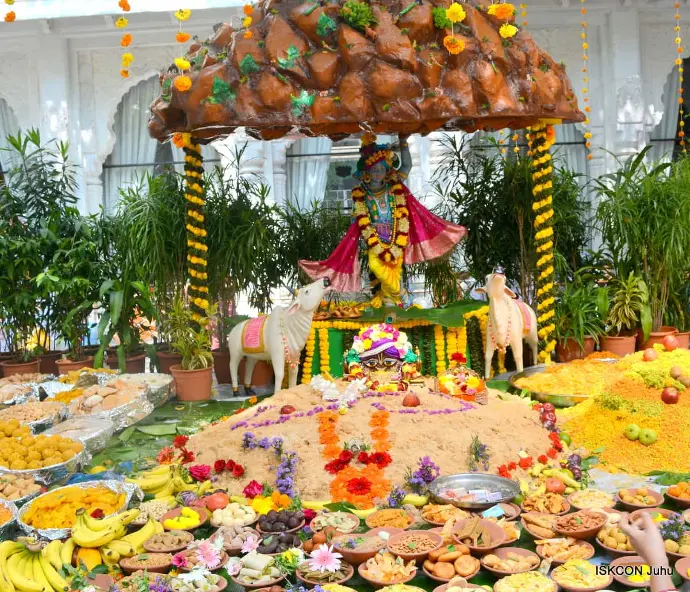
Temples prepare grand Annakut offerings hundreds of food items arranged like a mountain before the deities of Radha and Krishna.
At Govardhan Hill, thousands of devotees perform Govardhan Parikrama (circumambulation), offering lamps, sweets, and flowers.
Chanting fills the air:
“Giriraj Maharaj Ki Jai!”
“Govardhan Giridhari Ki Jai!”
Devotees remember that every grain of food is a gift of God and express their gratitude through service and devotion.
Diwali and Annakut Utsav in Vrindavan – A Unique Blend of Light and Love
The combination of Diwali’s divine light and Annakut’s gratitude makes Diwali and Annakut Utsav in Vrindavan a festival like no other.
Diwali represents the illumination of the heart : when the soul is lit by Krishna’s presence.
Annakut represents the offering of gratitude : when the heart overflows with love and thankfulness for God’s grace.
Together, they remind us that the true light of Diwali is not from lamps but from love, and the real Annakut is not the food we offer but the devotion we serve with.
Temples That Celebrate Diwali and Annakut Utsav in Vrindavan
Some of the most beautiful celebrations take place in:
1. Banke Bihari Temple
One of the oldest and most beloved temples in Vrindavan, Banke Bihari Mandir glows with thousands of lamps.
Devotees throng for darshan as the Lord is adorned in dazzling attire, and the entire temple becomes a lake of light and devotion.
2. ISKCON Vrindavan
At Sri Krishna-Balaram Mandir, Annakut Utsav is celebrated with an enormous display of food offerings.
Bhajans, kirtans, and Govardhan Puja are performed throughout the day, and the temple resonates with the sound of “Hare Krishna, Hare Rama.”
3. Prem Mandir
Known for its grandeur and divine beauty, Prem Mandir is illuminated with thousands of colored lights during Diwali.
The Annakut display here is breathtaking : a mountain of prasadam offered to Radha and Krishna with love.
4. Govardhan Hill
At Govardhan, Diwali and Annakut Utsav take on the most sacred meaning.
Devotees perform Giriraj Parikrama, light lamps along the path, and sing bhajans late into the night.
It is believed that even the stones of Govardhan shine brighter on this day, blessed by Krishna’s touch.
The Symbolism of Light and Food in Devotion
The lamps of Diwali and the food of Annakut carry deep spiritual meanings:
Lamps : Symbolize the light of the soul and the victory of knowledge over ignorance.
Annakut (Food Offering) : Represents gratitude, as every grain of food reminds us of Krishna’s mercy.
Colors and Decorations : Reflect the beauty of divine creation and the joy of serving the Lord.
Thus, every aspect of Diwali and Annakut Utsav in Vrindavan reminds us to live with thankfulness and devotion.
How to Celebrate Diwali and Annakut Utsav at Home
Even at home, you can bring the spirit of Vrindavan into your life:
Clean and decorate your home altar with diyas, flowers, and pictures of Radha-Krishna.
Light 11 or 108 lamps as an offering to the Lord.
Chant the Mahamantra:
Hare Krishna Hare Krishna, Krishna Krishna Hare Hare,
Hare Rama Hare Rama, Rama Rama Hare Hare.Prepare a small Annakut : offer sweets, fruits, and cooked dishes to Krishna.
Read the story of Govardhan Leela and meditate on Krishna’s protection.
Feed the poor or cows as a symbol of gratitude and compassion.
The true celebration is not in luxury but in love and service.
The Eternal Message of Diwali and Annakut Utsav in Vrindavan
The message of Diwali and Annakut Utsav in Vrindavan is timeless and universal:
Light your heart with devotion, not just your home.
Offer your gratitude to God for every blessing in life.
Let your love for Krishna guide you through the darkness of ignorance.
Remember that the greatest gift you can offer is a heart full of faith.
When the lamp of love burns within, every day becomes Diwali, and every meal becomes an Annakut.
The Festival of Gratitude and Divine Love
Diwali and Annakut Utsav in Vrindavan are more than festivals they are spiritual experiences that awaken the heart to the beauty of divine love.
In Vrindavan, every diya whispers “Radhe Radhe,” and every grain of food offered says “Thank You, Krishna.”
The air vibrates with devotion, the temples glow like heaven, and the hearts of devotees overflow with joy.
Let us celebrate not just with lamps and sweets, but with love, humility, and gratitude.
Because the true meaning of these festivals lies in realizing that life itself is God’s gift and devotion is our thankfulness.
“When gratitude becomes worship and love becomes light,
Every heart becomes Vrindavan : shining in Krishna’s eternal night.”
Jai Shri Radhe Krishna! Jai Giriraj Govardhan! Radhe Radhe!